

Small Size, Big Impact – Introducing the 8850 GC
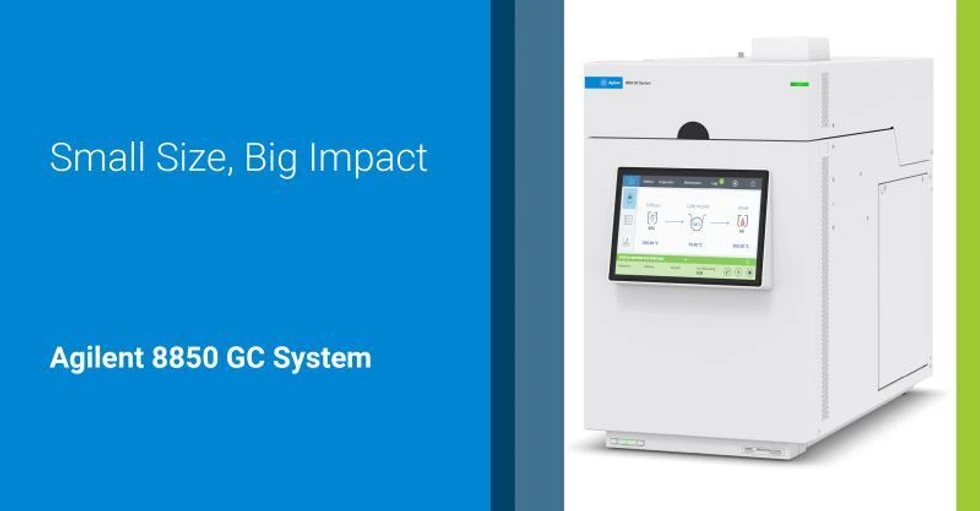
The newly released Agilent 8850 Gas Chromatograph is a small, high-performance GC that takes just half the bench space of traditional instruments.
Continuing the legacy of GCs like the 6850 and 8890, the new 8850 delivers the chromatographic performance and rugged reliability you’ve come to expect from Agilent. Using 30% less power than other GCs, the 8850 can also help reduce energy costs and meet sustainability goals.
In this webinar you will learn:
- How the 8850 GC helps to maximize efficiency of lab space, energy usage, and operator time
- How the 8850 has been used to achieve fast cycle times without compromising on chromatographic performance
- How intelligent features built into Agilent GCs like the 8850 keep your instrument running at its best
Join us to learn more about this exciting new Agilent GC!
Presenter: James Cain, PhD (Product Manager, Agilent Technologies, Inc.)
As Product Manager in the Gas Phase Separations Division of Agilent, James helps guide the development of new technology and insights for the gas chromatography market. He is focused on understanding the needs of GC users globally, tracking changes in the market and regulatory landscape, and seeking new opportunities to apply Agilent innovation to emerging applications.
James earned his BS in Chemistry from the University of Pittsburgh and PhD in Organic Chemistry from the University of Arizona. After serving in various research and commercial roles with other organizations, including as an Agilent customer, he has been a product manager with Agilent Technologies for the last four years.
Presenter: Scott J. Hoy, PhD (Applications Chemist, Agilent Technologies, Inc.)
Before joining Agilent, Scott spent 8 years in the petrochemical industry as a refinery QC chemist and an R&D GC and GCxGC SME. Scott joined Agilent technologies in 2021 as a GC Applications Chemist in Wilmington, Delaware. His current work at Agilent is focused on GC applications supporting the renewable fuels transition and the emerging GCxGC applications landscape.
Scott received his BS in Chemistry from the Georgia Institute of Technology in 2009 and his PhD in Analytical Chemistry from the University of South Carolina in 2013.


