

Unknowns Structure Elucidation in the Development of Sustainable Agricultural Products by Modern Mass Spectrometry
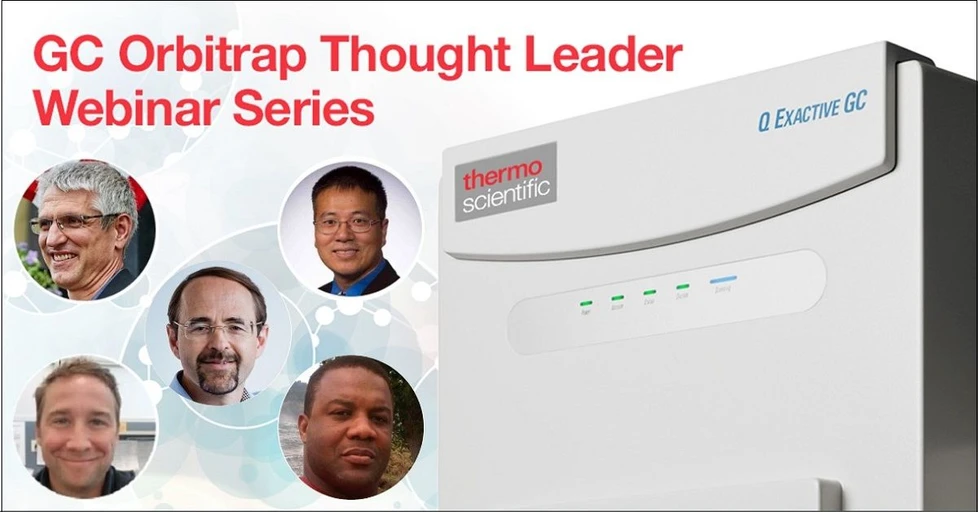
In agriculture products R&D and manufacturing, small molecule unknowns identification (ID) is important in both the crop protection and seeds spaces. For crop protection, unknowns ID is critical for both: 1) registration of products with government regulatory agencies and 2) side-reaction mechanisms for elimination or reduction of final product impurities. For seeds and traits, unknowns ID becomes important for phenotyping and gene-mode of action through plant tissue metabolomics. High-resolution mass spectrometry (HRMS) coupled with either gas chromatography (GC) or liquid chromatography (LC) is an excellent tool for structure elucidation due to the combination of speed, sensitivity, and mass accuracy. The selection and application of appropriate software tools also become indispensable. Here, efforts to improve the confidence of unknowns and throughput on both crop protection and seeds using commercially available software and hardware tools will be discussed.
Presenter: Chengli Zu, Ph.D. (Principal Investigator, Mass Spectrometrist, Corteva Agriscience)
Chengli Zu is an analytical chemist focusing on structural elucidation of small molecule organic compounds using mass spectrometry. Chengli started his career in Analytical Sciences at Dow Chemical Company after obtaining his Ph.D. degree in organic chemistry in 2007. His key job responsibilities were to support a wide variety of projects/products such as surfactants, coatings, performance fluids, reverse osmosis membranes, electronic materials, and synthetic crop protection molecules. Chengli has four granted patents and two provisional patent filings during his career at Dow. In August 2017, Chengli joined Analytical Sciences in Dow AgroSciences (now Corteva Agriscience) and relocated to Indianapolis. He is currently leading the mass spectrometry-based impurity ID team in support of new pipeline molecules and manufacturing problem solving.
Before joining Dow Chemical, Chengli studied organic chemistry for his Ph.D. at the Mississippi State University under the guidance of Dr. Michael Koscho. His dissertation is titled “Enantiomer Analysis Using Electrospray Ionization Mass Spectrometry.” In graduate school, he spent most of his time synthesizing chiral pure compounds as chiral selectors, which were used to recognize chiral analytes with electrospray ionization mass spectrometry (ESI/MS). Chengli also had two years of experience in natural products chemistry.
Presenter: Brian Ruddy, Ph.D. (Research Scientist, Corteva Agriscience)
Brian Ruddy originally hails from Troy, NY and has been with Corteva Agriscience since 2013. He received his B.S. in Chemistry from Rensselaer Polytechnic Institute and his Ph.D. in Analytical Chemistry from Florida State University, where he studied mass spectrometry under Alan Marshall at the National High Magnetic Field Laboratory’s Ion Cyclotron Resonance national user facility. He has managed mass spectrometry facilities at the National Institutes of Health in Rockville, MD and at Taxon Biosciences in Tiburon, California. Brian enjoys golf, saltwater fishing (when he can get to the coast), and spending time with his wife and two small children.


